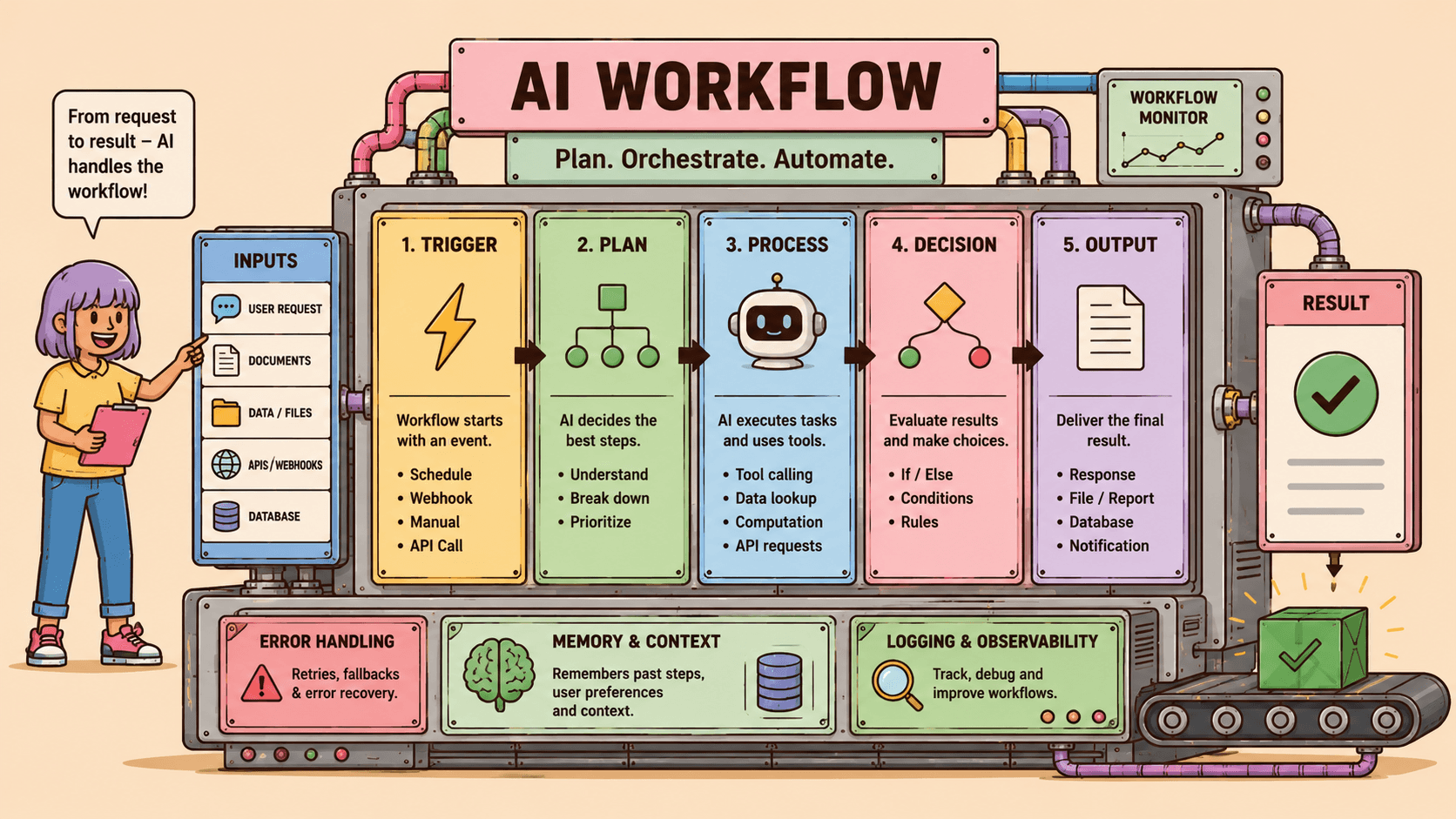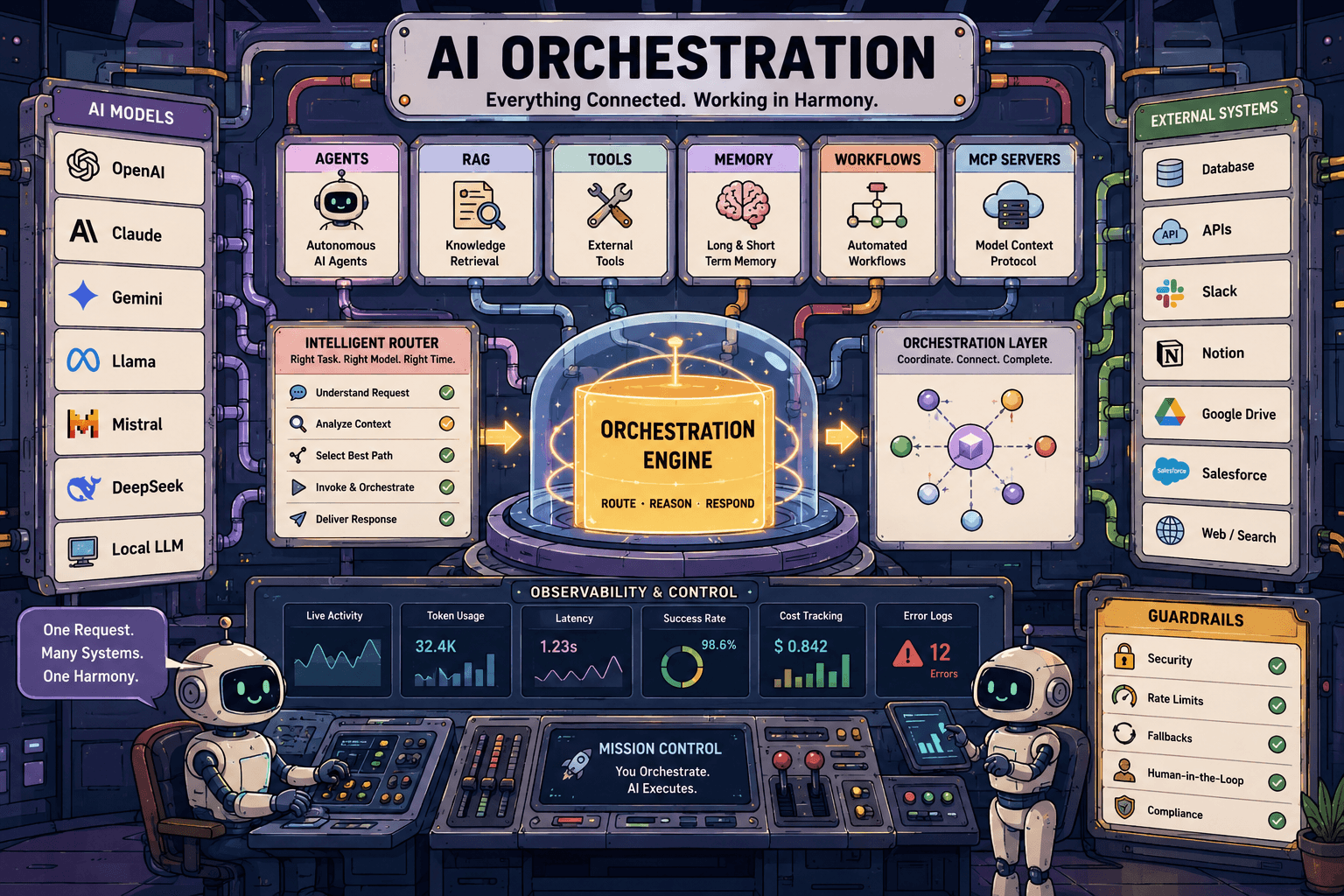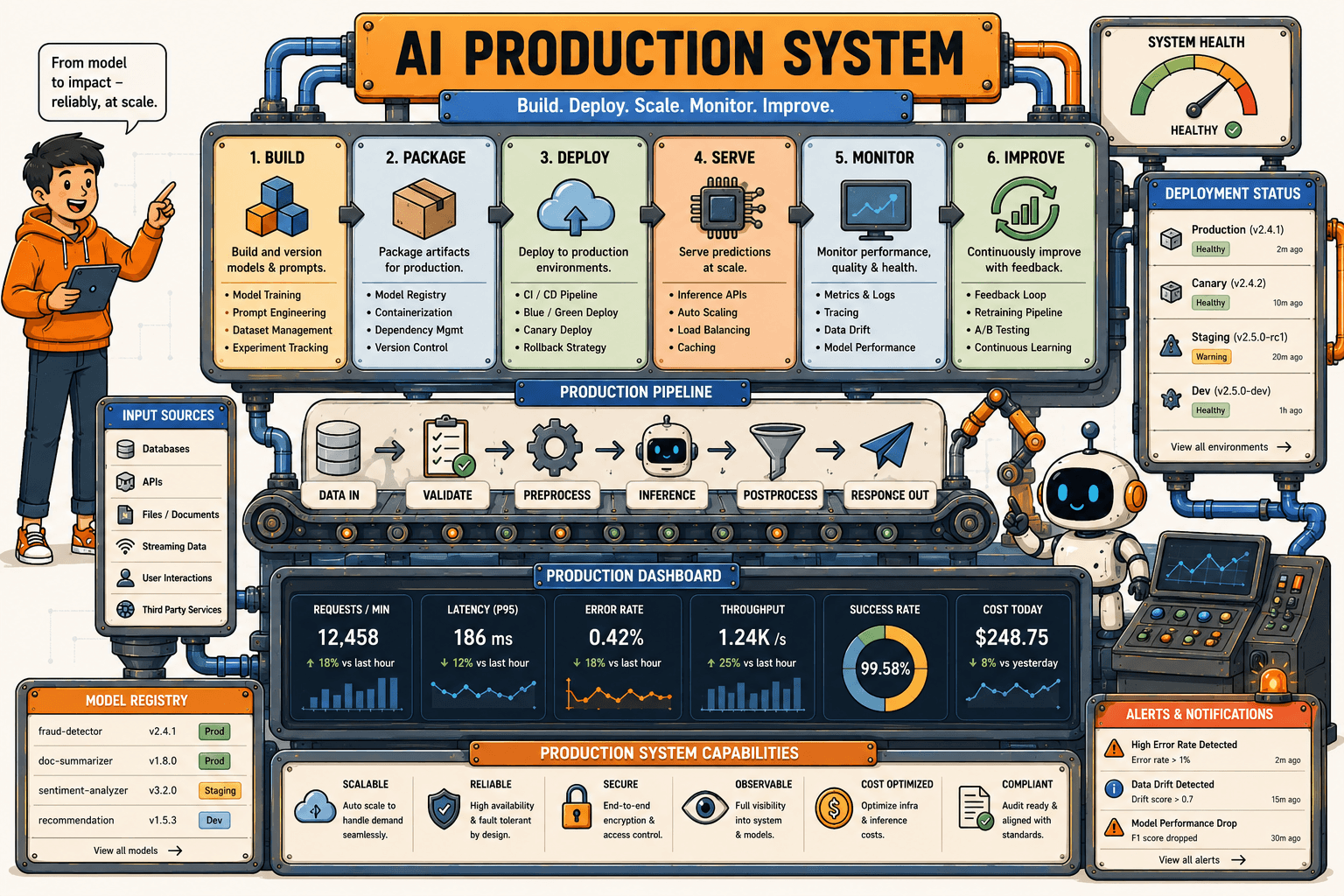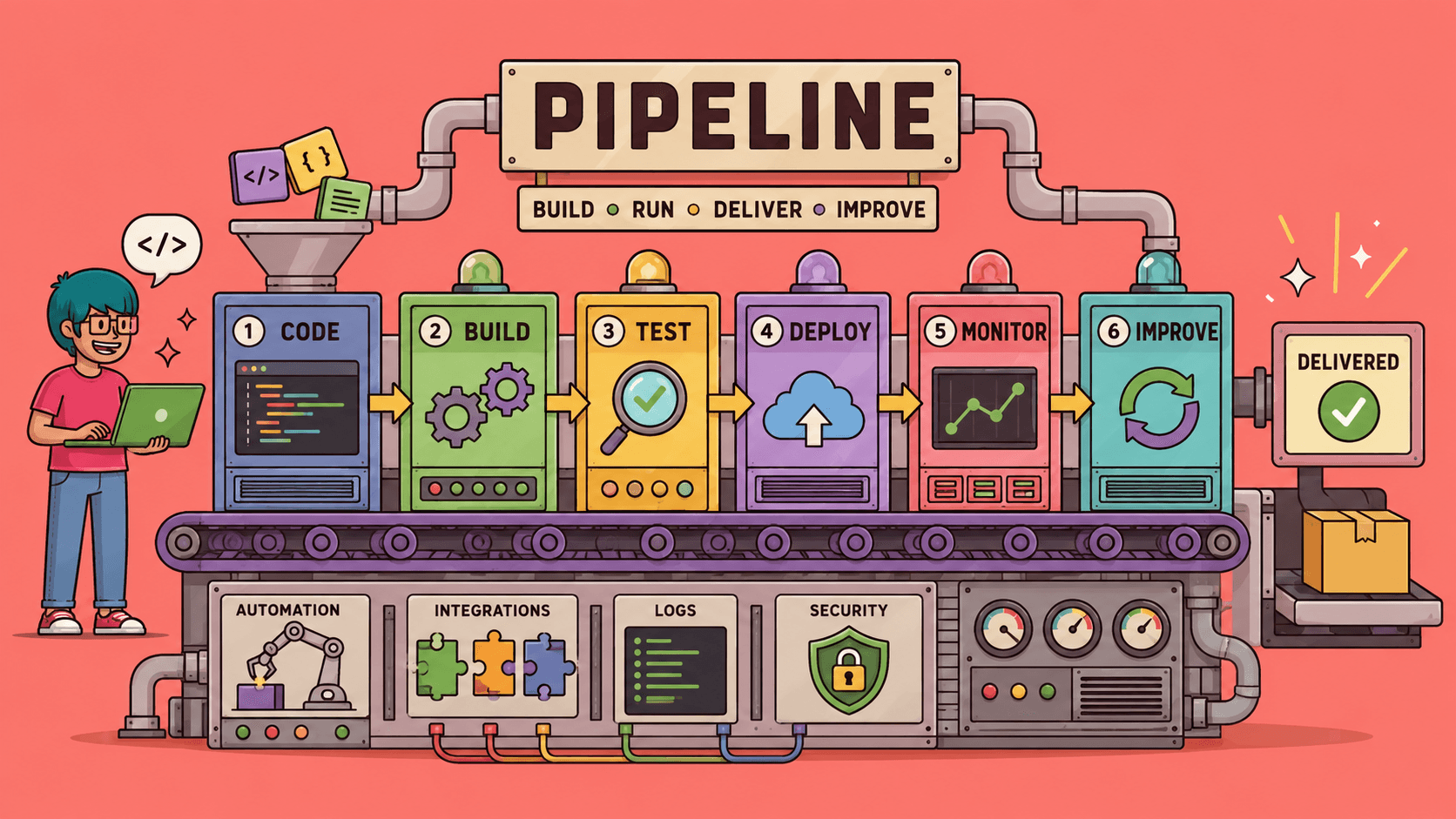
A pipeline is the ordered path from raw input to deployed output — ingest, enrich, generate, validate, publish, observe.
In my daily workflow
- I sketch stages on paper: what is deterministic vs model-driven.
- Each stage gets a single responsibility and a typed contract between steps.
- I add idempotency and retries at boundaries (queues, webhooks, DB writes).
- I trace one request end-to-end in staging before calling it done.
How it makes me work smarter
Pipelines prevent 'one giant prompt' anti-patterns. Splitting ingest from generation means I can re-embed content without re-running the LLM, or swap models without touching Supabase writers. Failures localize to a stage instead of poisoning everything downstream.
My setup
- Next.js server actions and API routes as stage boundaries
- Supabase for state and pgvector embeddings
- Background jobs via Vercel cron or workflow engine
- Sentry spans per stage; PostHog for funnel drop-off
On this portfolio
Knowledge content flows admin edit → validation → revalidatePath → public page → optional embedding for RAG. The copilot uses a LangGraph pipeline: retrieve context, plan tools, generate, validate schema, stream to client.