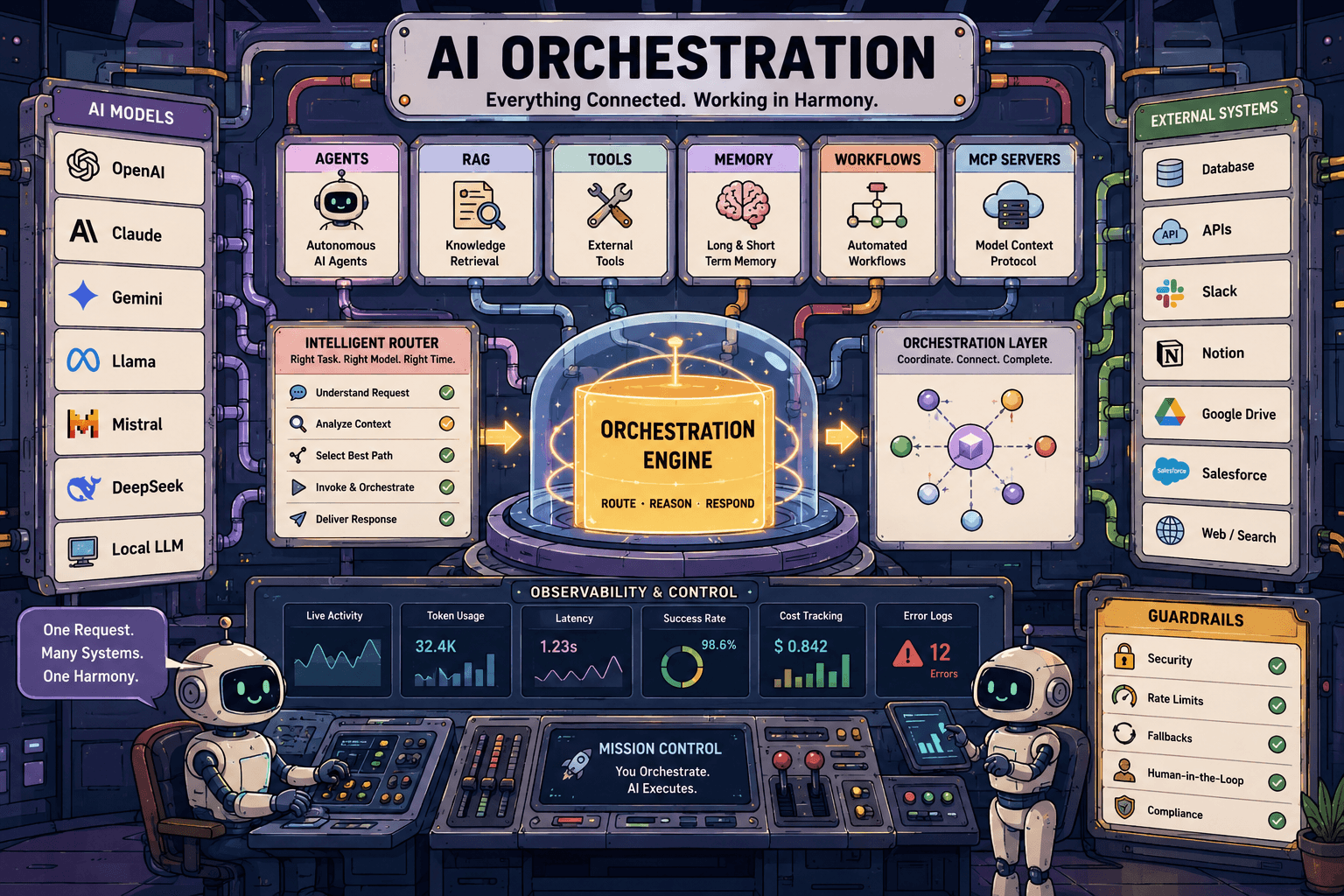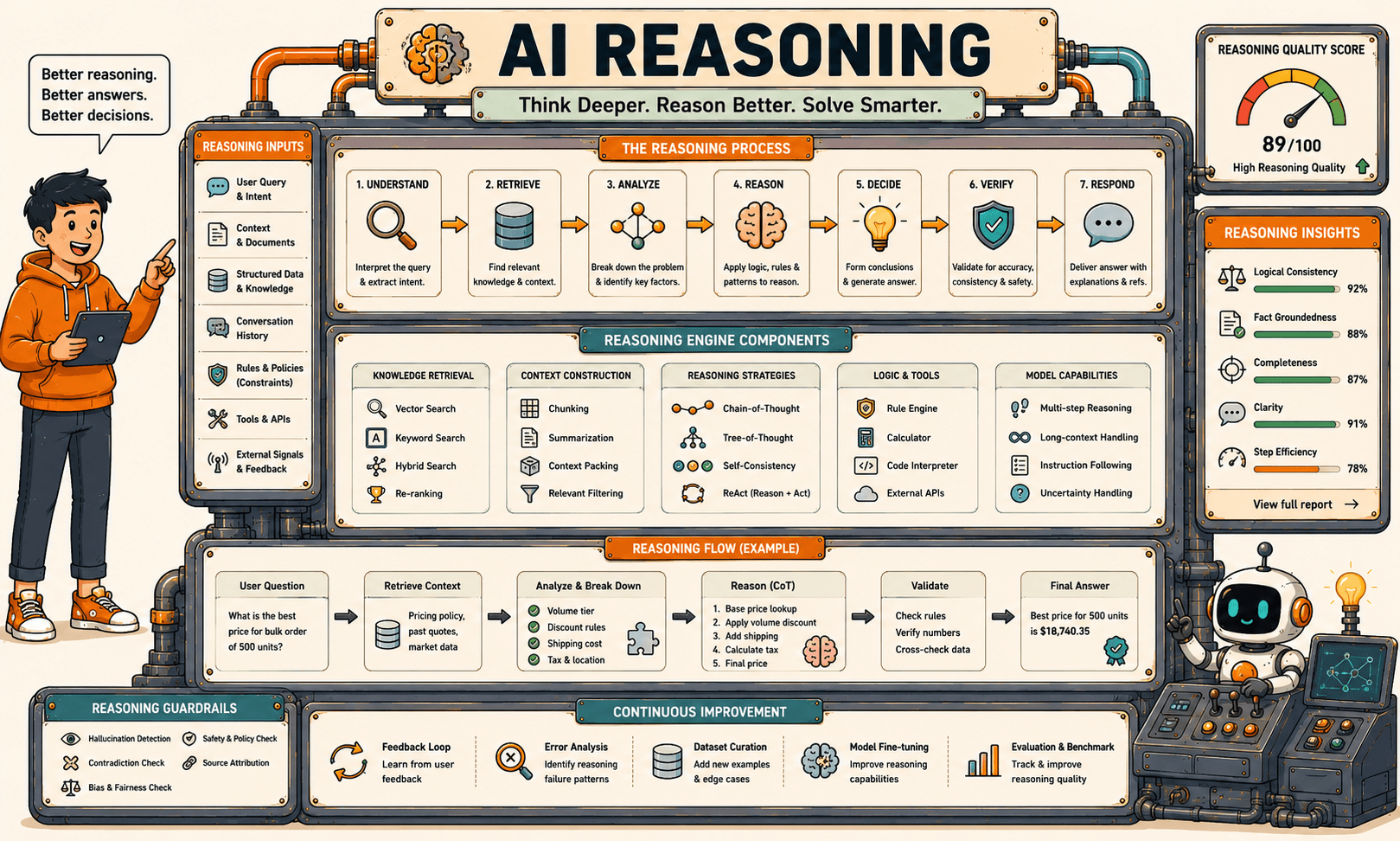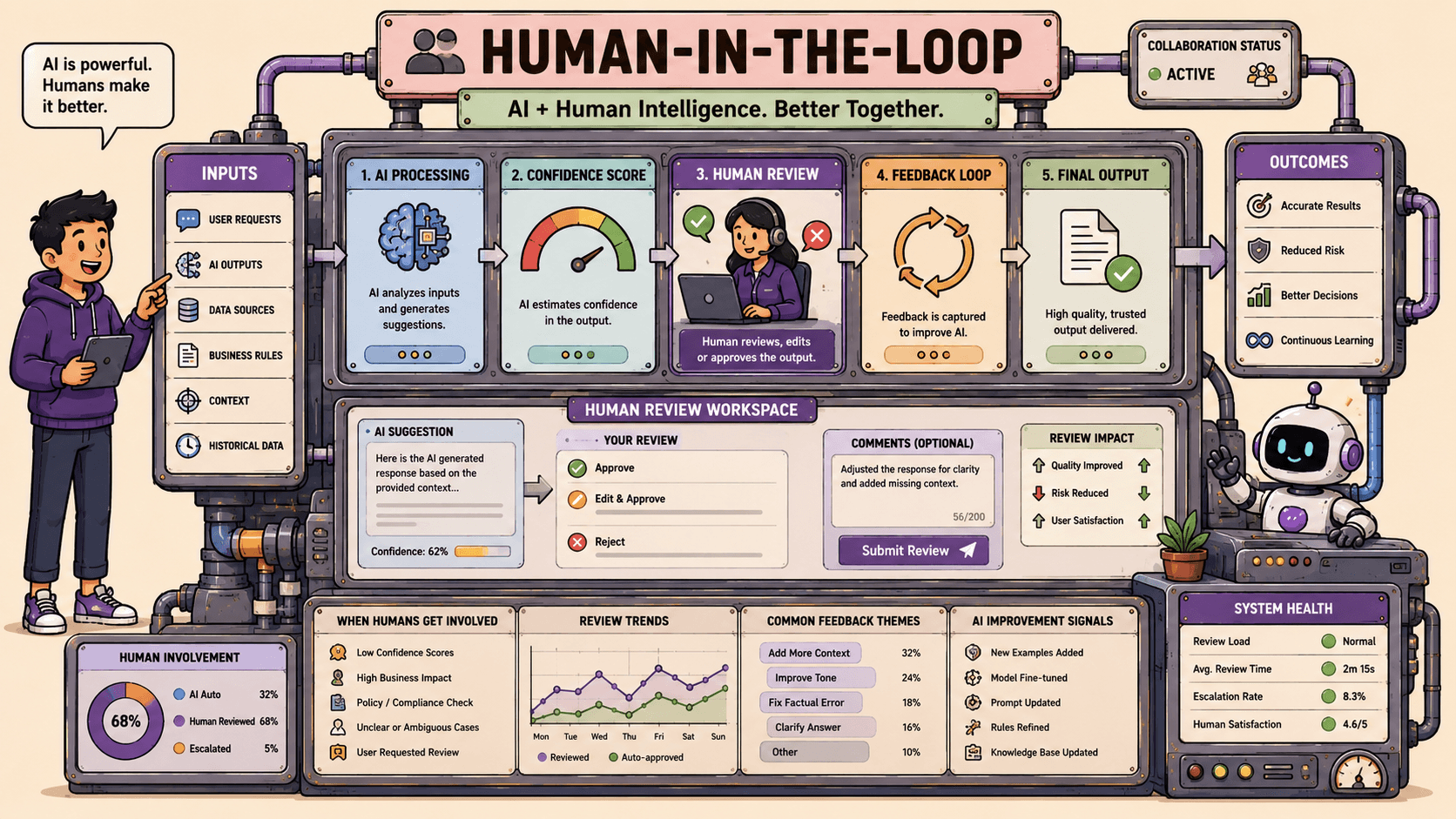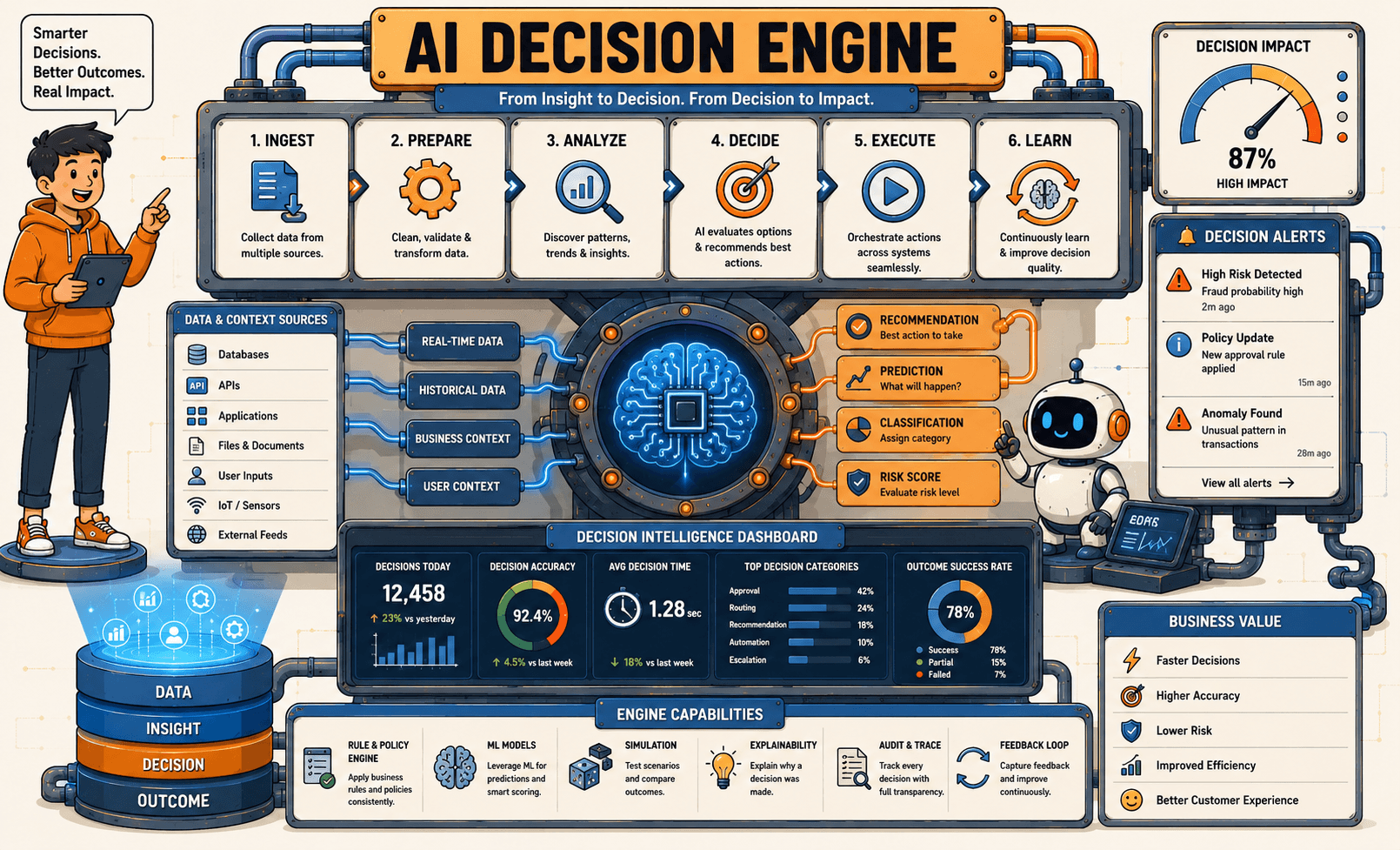
A decision engine chooses the next step — which tool, model, or human queue — from rules and classifiers, not monolithic prompts.
In my daily workflow
- I encode decisions as explicit branches: if confidence < X → human review.
- Classifiers stay small and fast; they route, not answer.
- I log decision inputs and outcomes for later eval mining.
- I avoid nesting decisions too deep without tests per branch.
How it makes me work smarter
Decision engines make behavior predictable. Job-fit might classify intent before calling heavy retrieval. Copilot graphs use conditional edges instead of asking one model to 'figure out what to do' in prose.
My setup
- LangGraph conditional edges
- Lightweight classifier calls with structured output
- Rules table for business policies in admin settings
- PostHog funnels on decision outcomes
On this portfolio
Copilot routing sends registry updates down tool paths and general chat down conversational nodes. Job-fit analytics reflects classifier decisions and recruiter overrides — fuel for improving the engine.