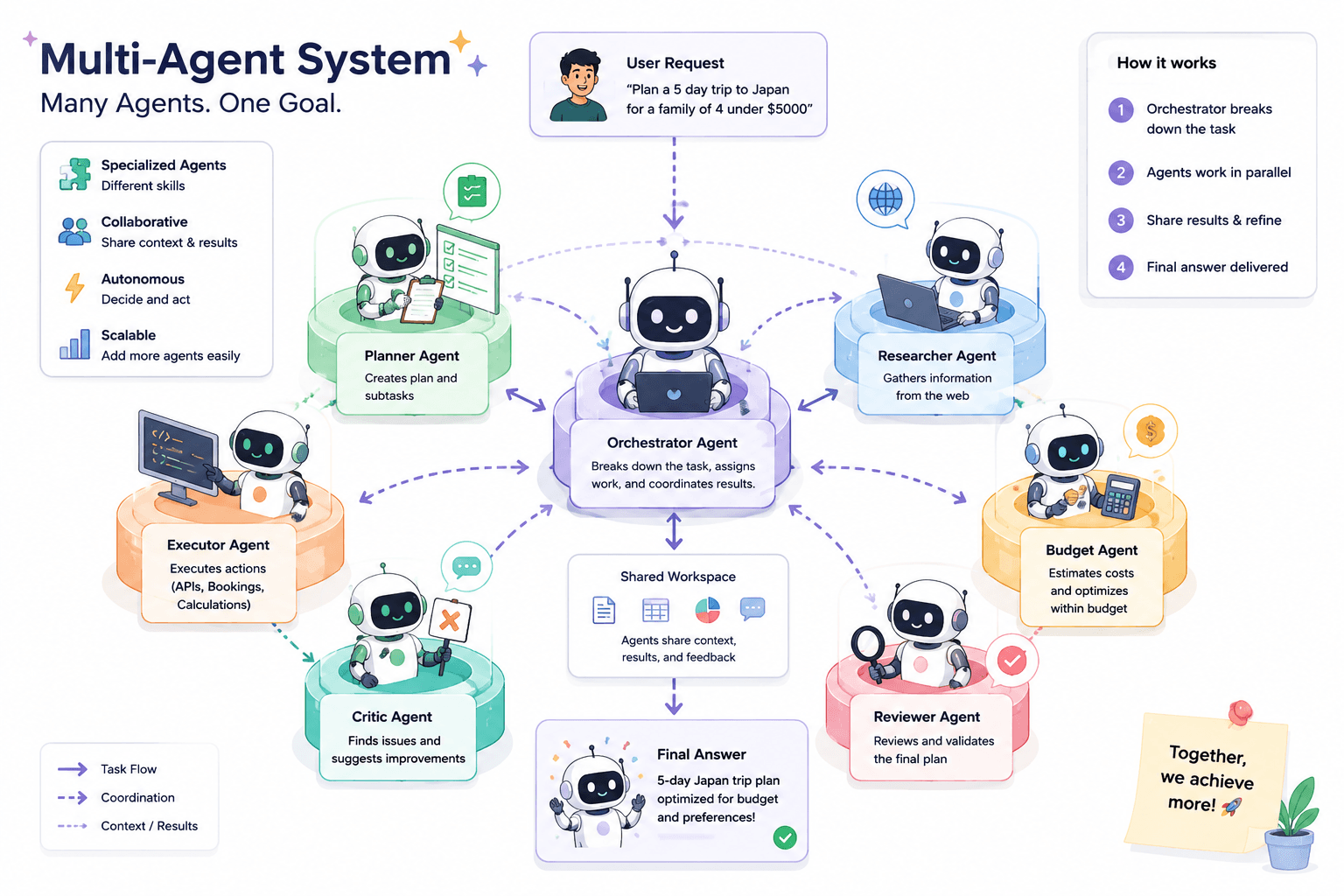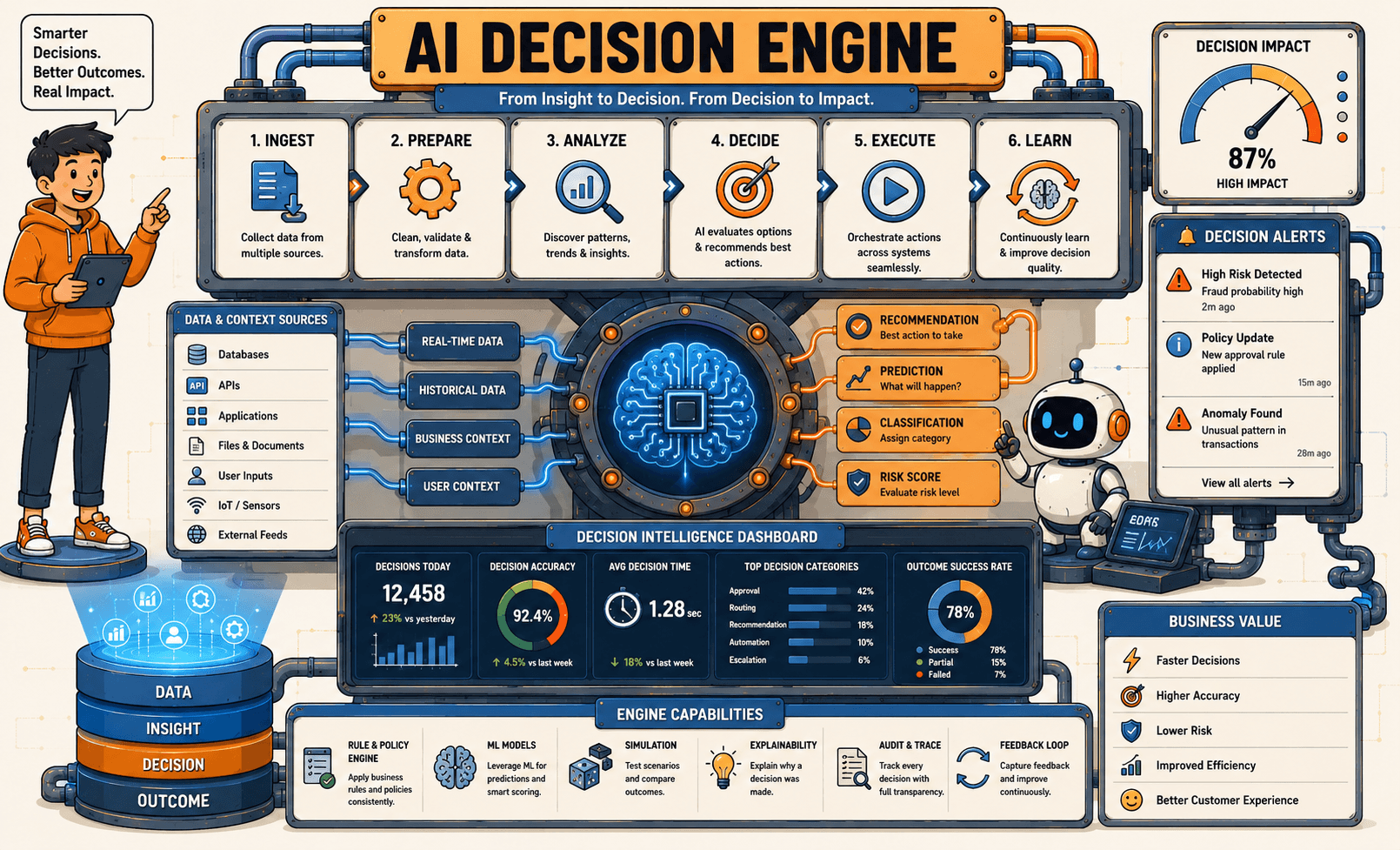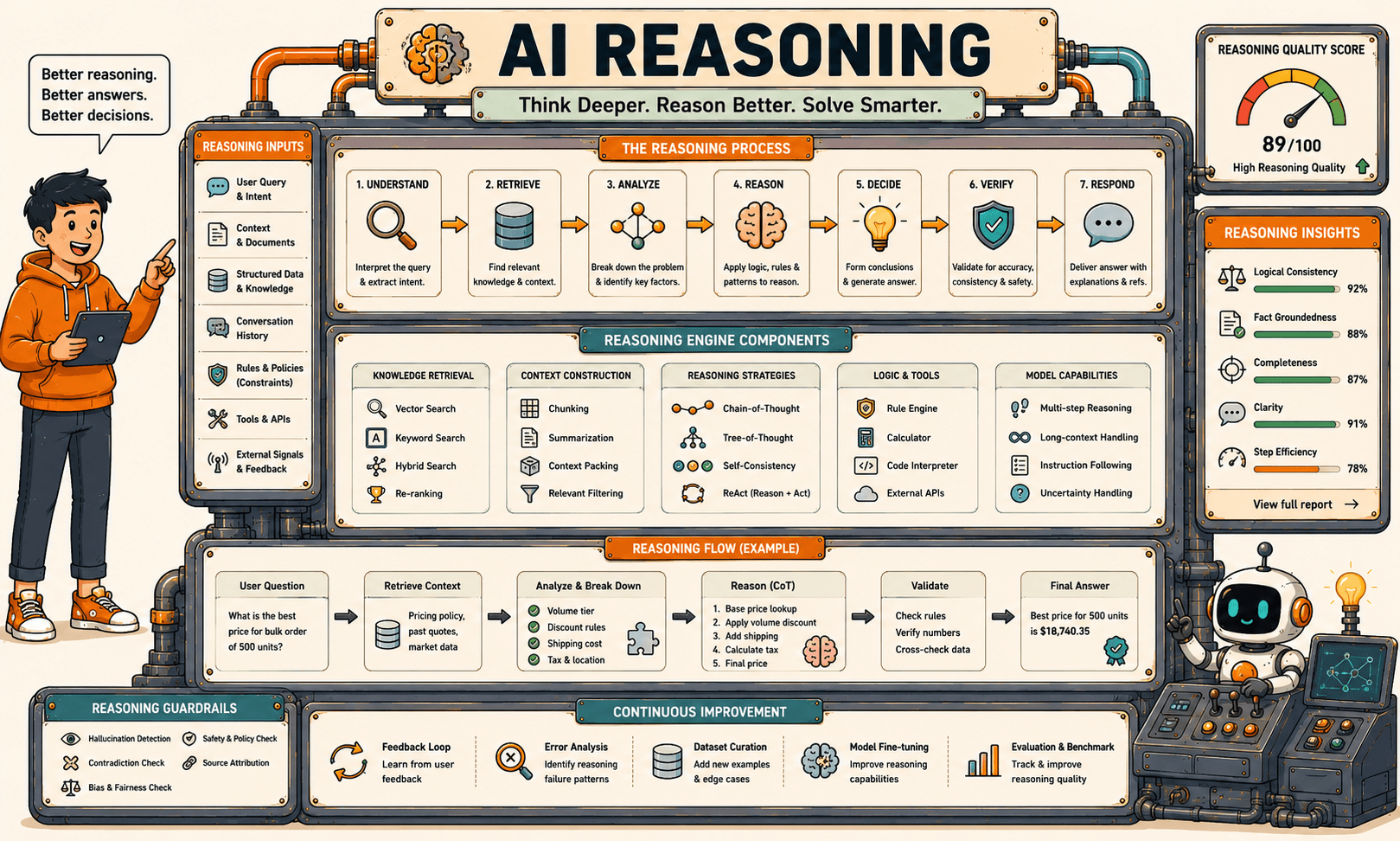
Reasoning is plan-then-act: decompose the question, verify intermediate steps, then answer — especially for multi-hop portfolio questions.
In my daily workflow
- For complex tasks, I ask the model to outline steps before executing tools.
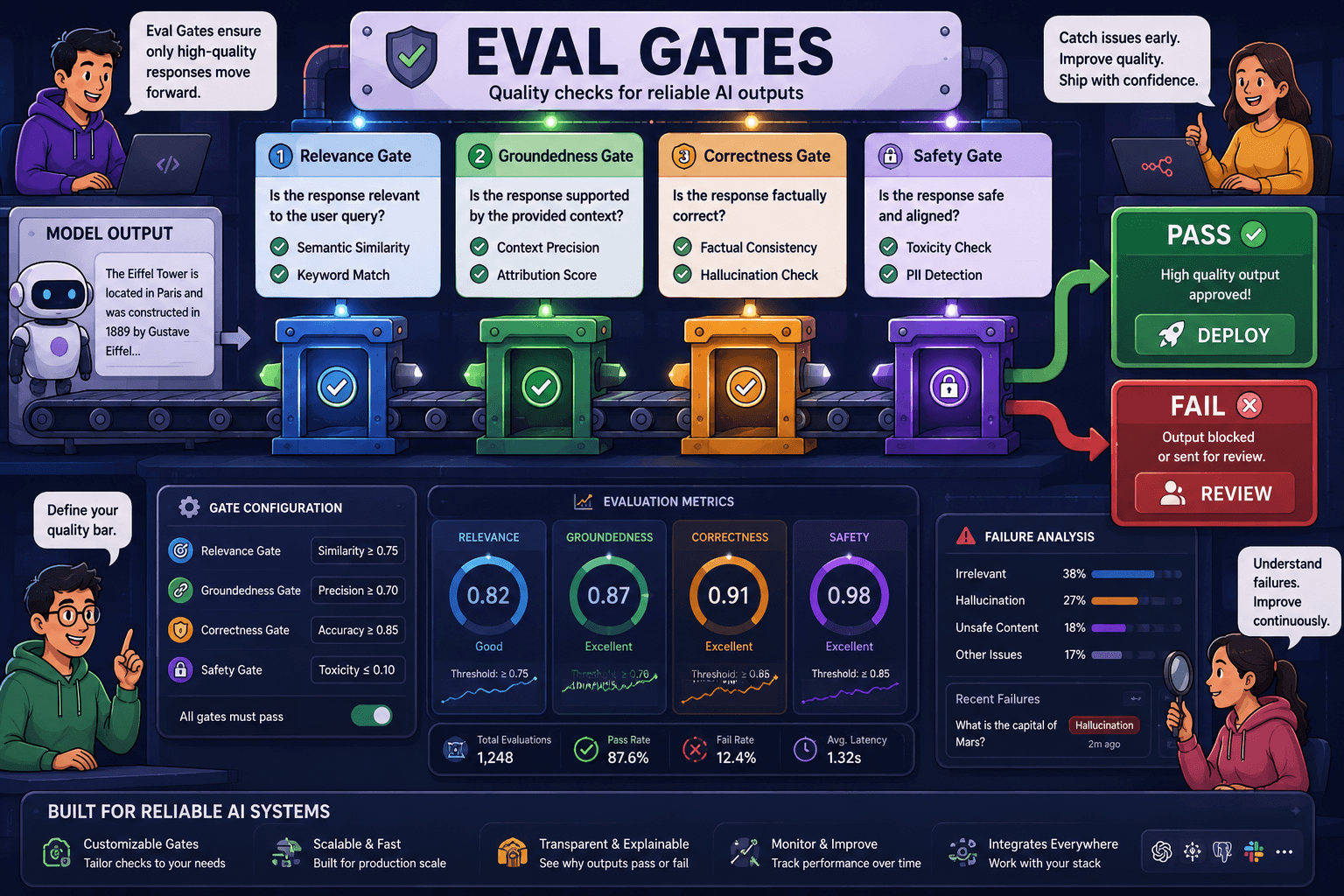
- I use verification prompts on high-stakes outputs (registry JSON, fit scores).
- I cap reasoning loops to prevent runaway token use.
- Eval cases include multi-step questions requiring combined retrieval.
How it makes me work smarter
Raw chain-of-thought in user-facing UI is noise; internal planning is valuable. Graph nodes can plan, tool nodes execute, validate nodes check — mirroring how I'd solve it manually. Reasoning without verification is theatre.
My setup
- Separate plan and execute nodes in LangGraph
- Self-check against schema before submit
- Retrieval across multiple knowledge types for compound questions
- Token budgets on planner models
On this portfolio
A visitor asking how RAG and eval gates work together gets an answer grounded in two gallery topics and knowledge pages — the assistant reasons over multiple chunks, not one blur paragraph.