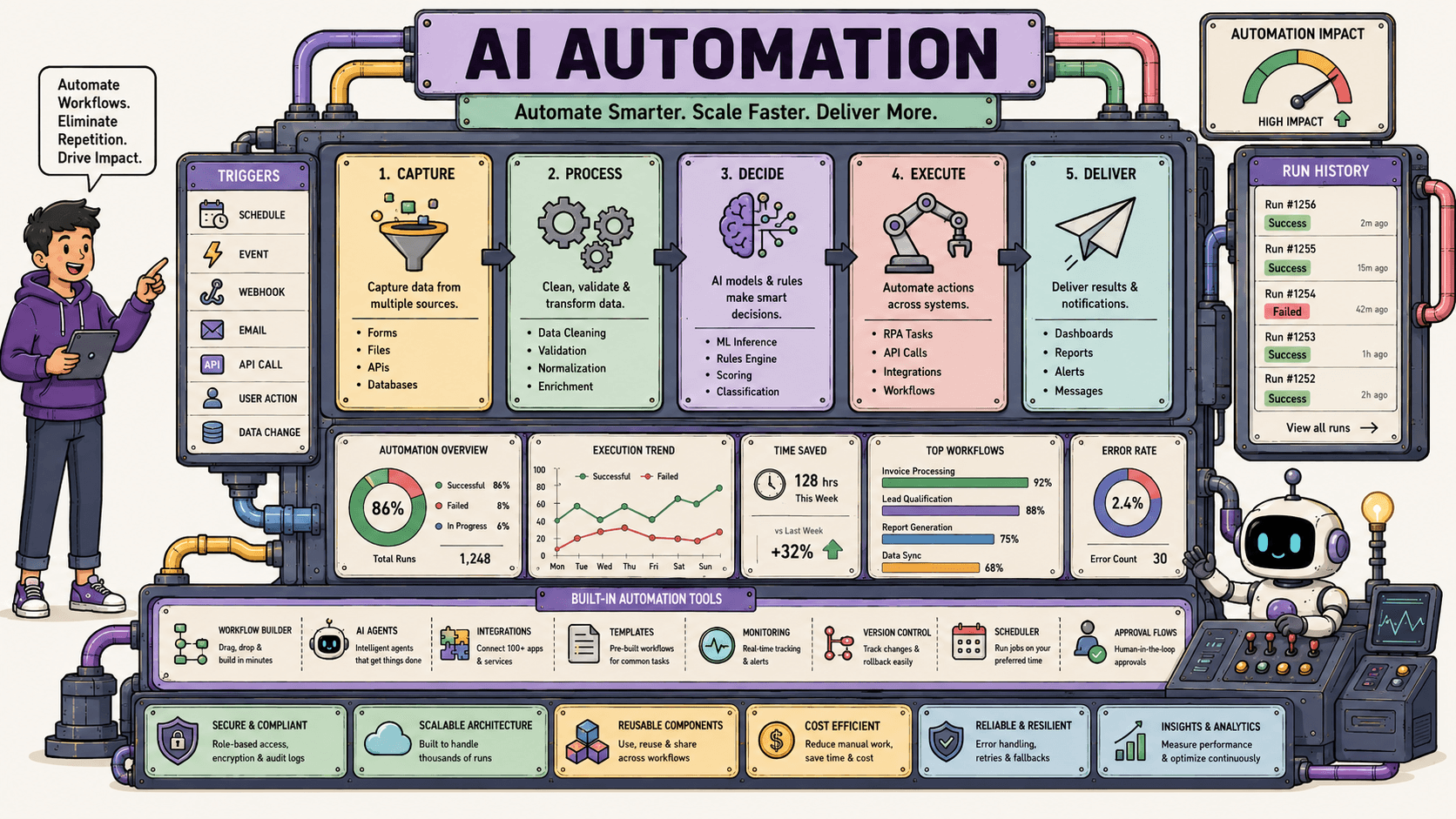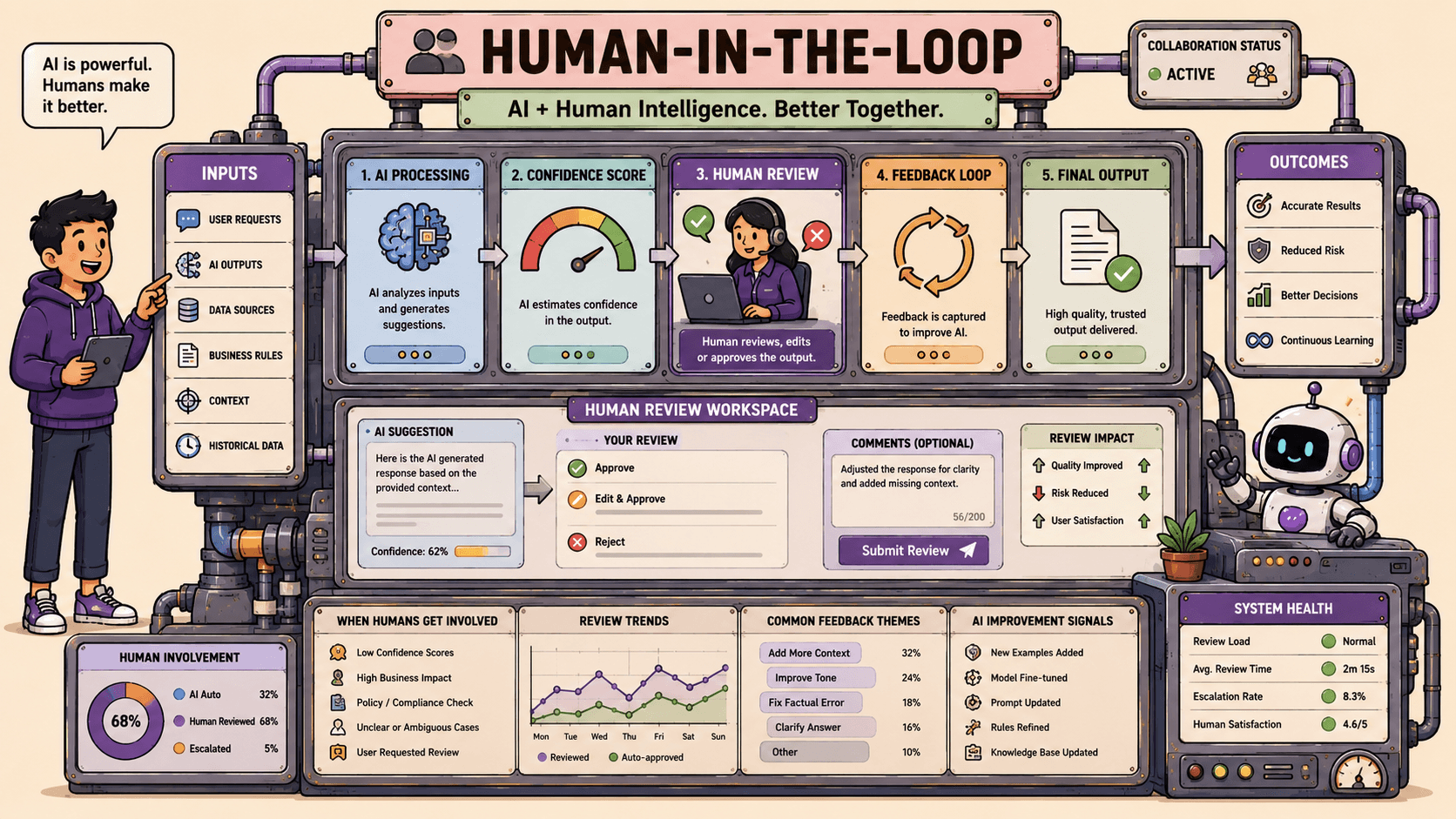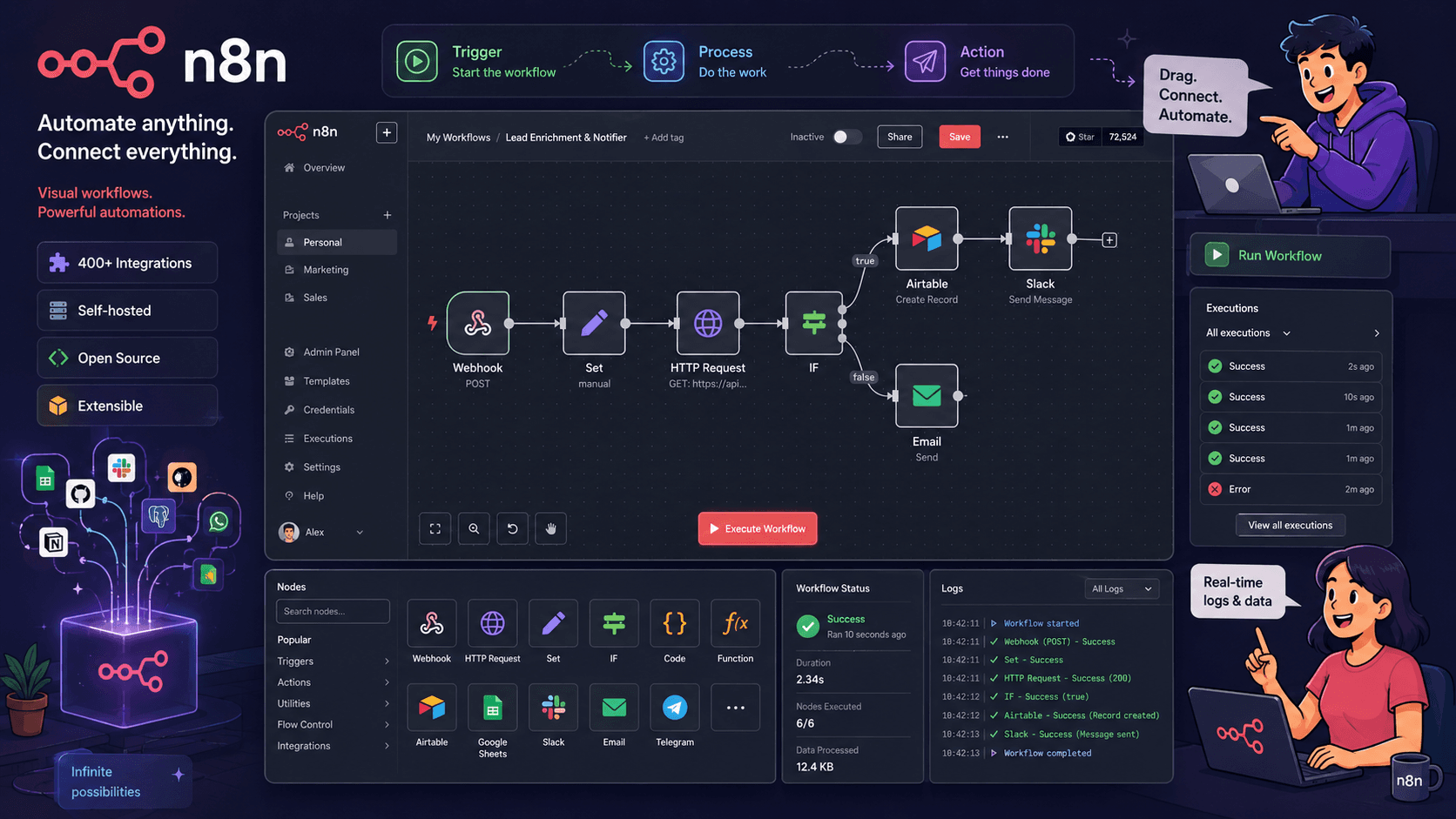
n8n handles triggers and glue — webhooks, schedules, and human-in-the-loop steps — where a full LangGraph deploy would be overkill.
In my daily workflow
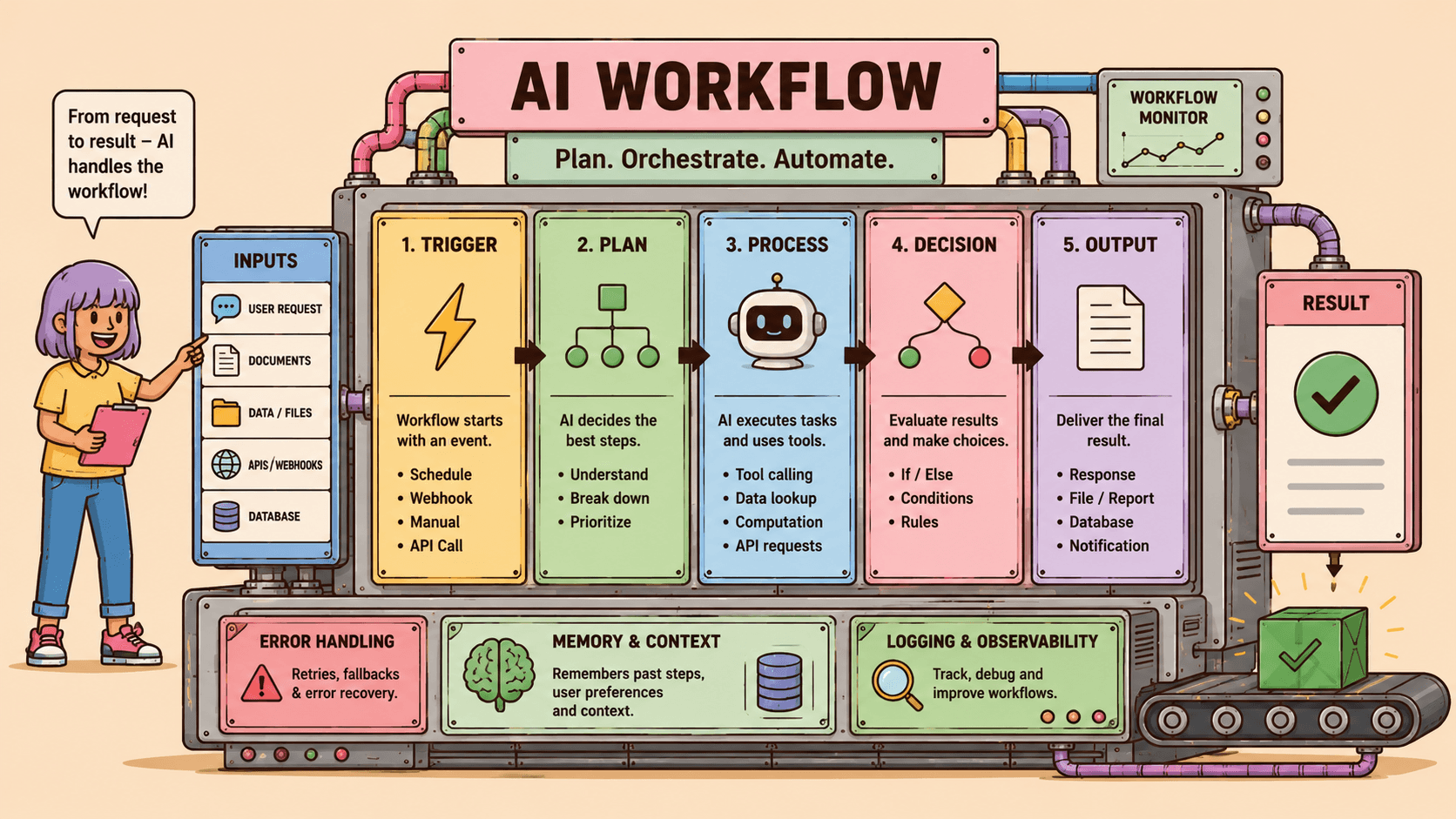
- I map the workflow: trigger → transform → model call → notify/review → write-back.
- Lightweight automations (RSS, form webhooks, keep-alive pings) stay in n8n.
- Anything needing typed state, branching tests, or repo coupling moves to code (Next.js API routes or Python).
- I log every n8n execution with enough metadata to replay failures.
How it makes me work smarter
n8n wins on speed for ops glue. I do not fight it for complex agent graphs — that's what LangGraph is for on this site — but I also do not write cron scripts for one-off integrations. The split keeps iteration fast without sprawl.
My setup
- Self-hosted or cloud n8n with credential vaulting
- Webhook nodes calling Vercel API routes with shared secrets
- Slack/email nodes for human approval on sensitive writes
- GitHub Actions for repo-native automation; n8n for external triggers
On this portfolio
The keep-alive workflow in `.github/workflows` could be mirrored in n8n for external cron; content ingestion experiments often prototype in n8n before graduating to typed server actions in the admin CMS.